
If there's chemical drain cleaner sitting in the pipe, don't snake, plunge, or open the trap. It can splash onto skin and eyes. Tell a plumber what you used.
What you'll need
You probably have these
Tick them off as you find them.
Only if you're missing something
- Plastic drain snakeThe barbed strip kind, sold near the drain cleaners$3 to $8
Links go to Amazon. Prices shown are estimates. As an Amazon Associate we earn from qualifying purchases. How we make money
The fix
- 1
Pull out the stopper
Many stoppers lift straight out or come out with a quarter turn. If yours won't, look under the sink for a small nut on a rod behind the drain. Loosen it, slide the rod back, and lift.
You'll know it's right whenThe stopper is out. Heads up, it may be wearing a hair beard.
- 2
Clean the stopper
Wipe the hair and gunk off with a paper towel. Rinse it.
You'll know it's right whenIt's shiny again.
- 3
Snake the drain
Push a plastic drain snake down the drain as far as it goes. Pull it straight up slowly.
You'll know it's right whenIt comes up with hair on the barbs. It'll look gross for a minute. Normal.
- 4
Repeat until it's clean
Go down a few more times until the snake comes up mostly clean.
You'll know it's right whenNo more clumps on the barbs.
- 5
Test with hot water
Put the stopper back. Run hot tap water for a minute.
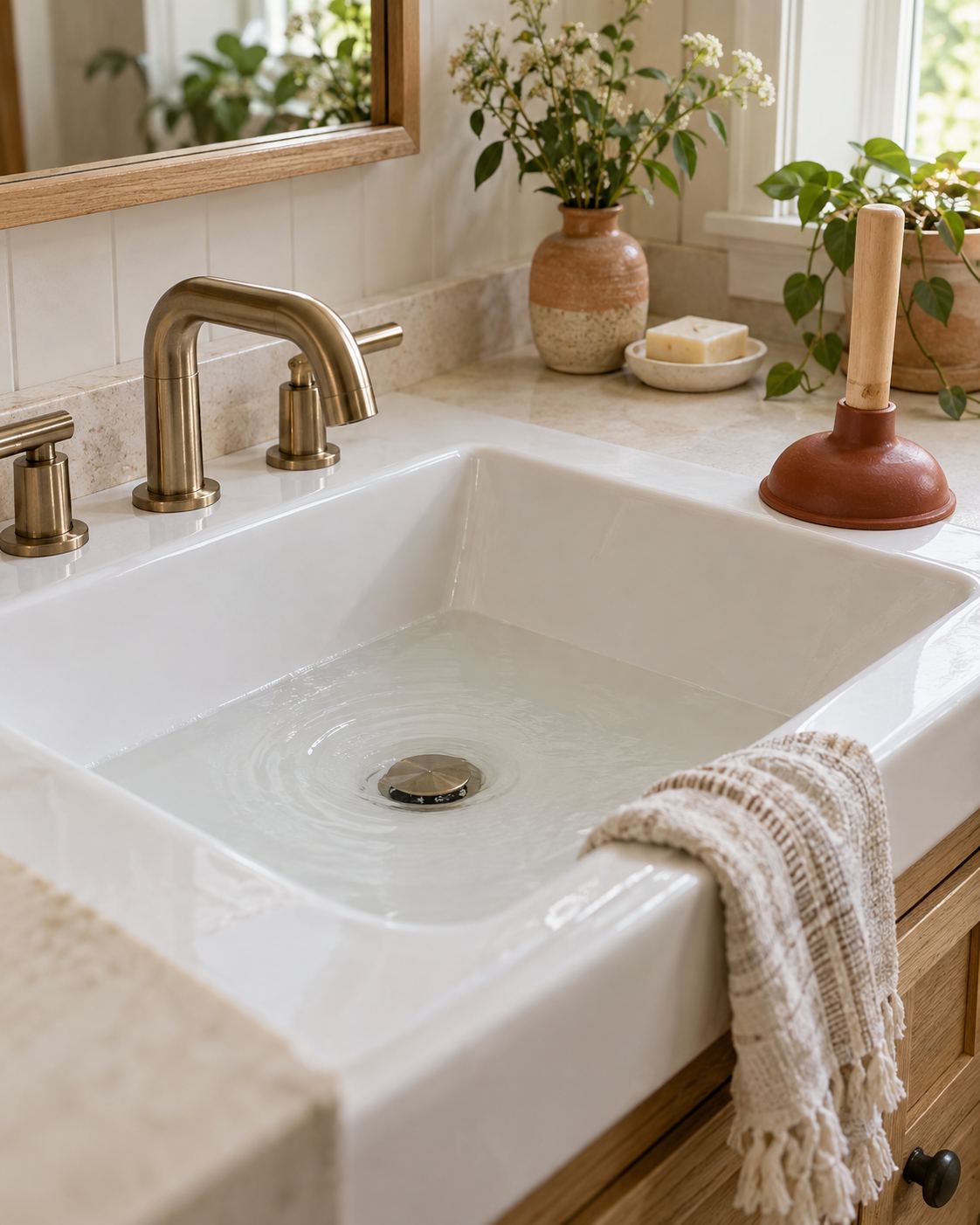
You'll know it's right whenThe water swirls down fast with no pond.
- 6
Open the P-trap if needed
Still slow? Set a bucket under the U-shaped pipe. Unscrew the two big nuts by hand and lower the trap.
You'll know it's right whenWater and gunk drop into the bucket.
- 7
Clean and reattach the trap
Rinse the trap in another sink or outside. Screw it back on hand-tight, then run water to check for drips.
You'll know it's right whenNo drips under the sink. Water drains fast.
Watch it drain. That's a sink with nothing in its throat.
Why it happens
Hair, toothpaste, and soap scum stick together right below the stopper. Every day a little more catches on what's already there. The stopper's metal parts act like a comb that collects it. It happens in every bathroom, no matter how clean you are.
 Edie's tip
Pull out the stopper and wipe it off once a month. It takes 2 minutes.
What not to do
- Pouring in chemical drain cleaner
It's harsh on old pipes and dangerous if you then plunge or open the trap. A plastic snake works better on hair anyway.
- Mixing cleaners
Never mix drain cleaners with each other, bleach, or vinegar. Some mixes give off harmful gas.
- Overtightening the trap nuts
Plastic nuts crack if you crank them with a wrench. Hand-tight plus a little is enough.
- Forgetting the bucket
The trap is full of water. Without a bucket, it ends up in your cabinet.
When to call a pro
Call a plumber if it's still slow after you've cleaned the stopper, snaked it, and cleaned the trap. Same if other drains in the house are slow too. Call if old metal trap pipes won't come loose, or anything leaks after you put it back.
Questions
Does baking soda and vinegar unclog a sink?
Not really. It fizzes, but it doesn't break up a hair clog. Pulling the hair out works much better.
What if my P-trap is metal?
Older metal traps can be corroded and may crack when you loosen them. If the nuts won't turn by hand or with gentle wrench pressure, stop and call a plumber.
What's the hole near the top of the sink?
That's the overflow. It can get grimy too. A bottle brush and some soapy water clean it out.
Written by the DIY Project team and checked against manufacturer instructions. How we check
Updated October 2, 2026.
See something wrong? Tell us.