
What you'll need
Materials
Tick them off as you find them.
Find it links go to Amazon. As an Amazon Associate we earn from qualifying purchases. How we make money
How to make it
Open windows and run fans while you prime and paint. If a lead test is positive, stop and hire a lead-safe certified pro before sanding.
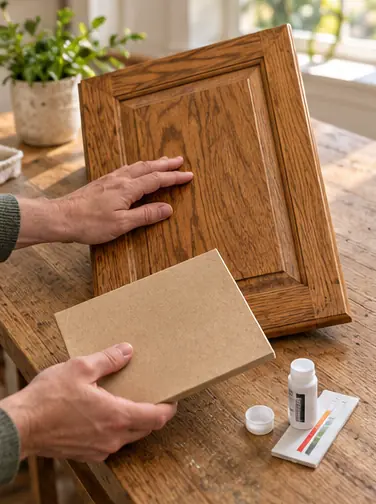 1
Check what you've got
Make sure the doors are real wood or MDF. Plastic-wrapped thermofoil peels, so stop here if that's yours. Test old finishes for lead in pre-1978 homes.
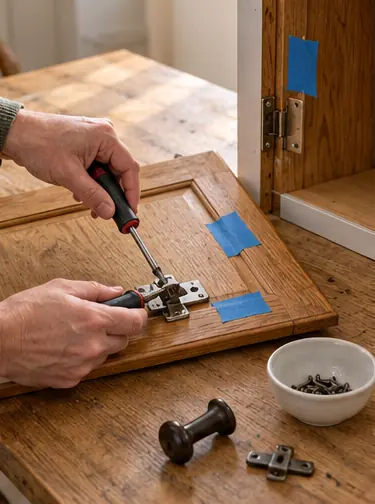 2
Remove and label
Take off the doors, drawers and hardware. Number each door and its hinge spot with tape so it all goes back the same.
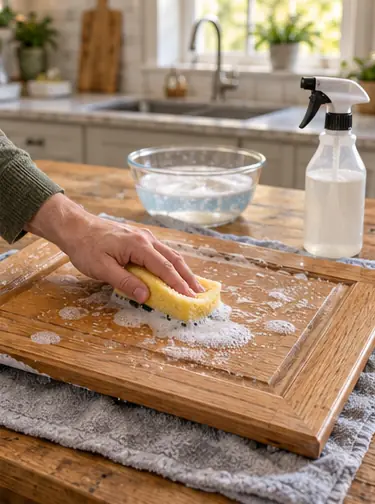 3
Degrease everything
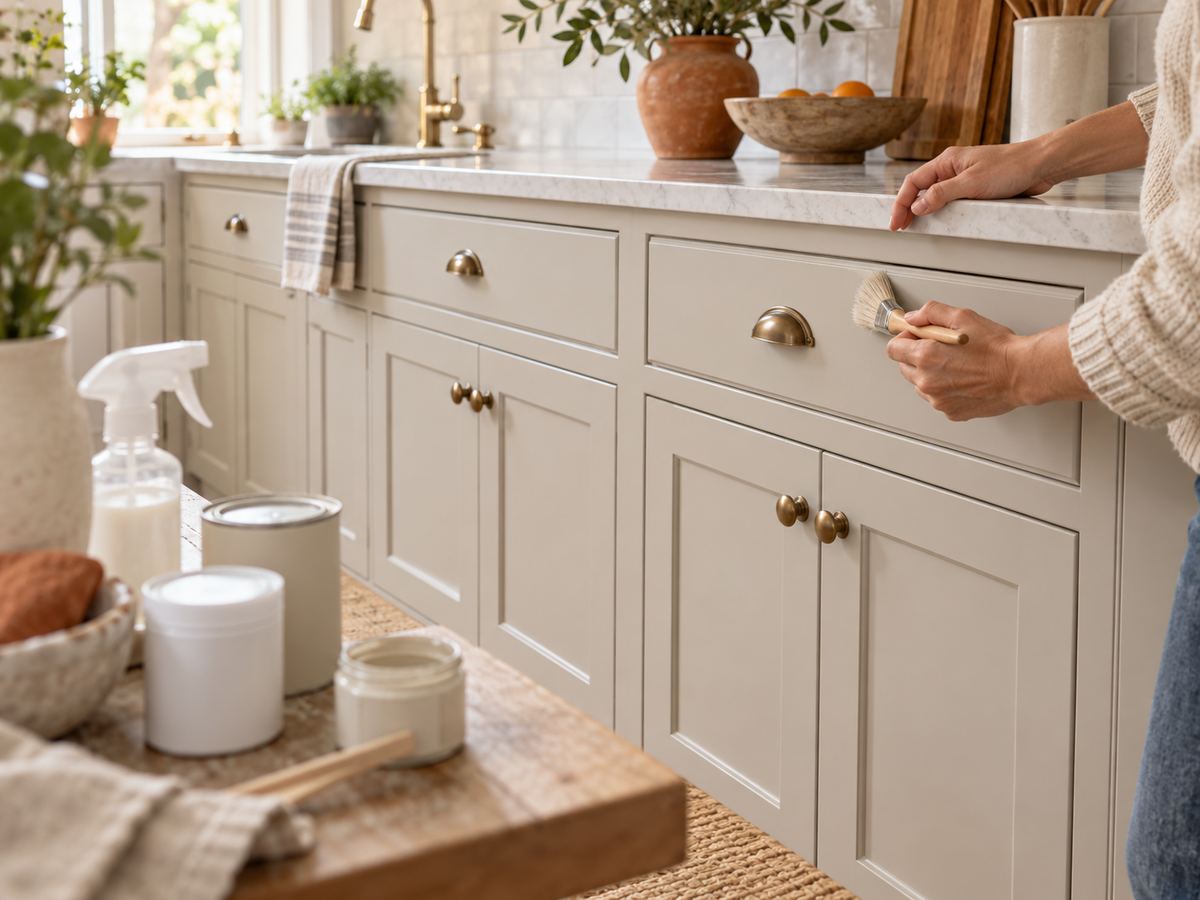
Scrub every surface with degreaser, rinse and let it dry. Cooking grease is why most cabinet paint fails.
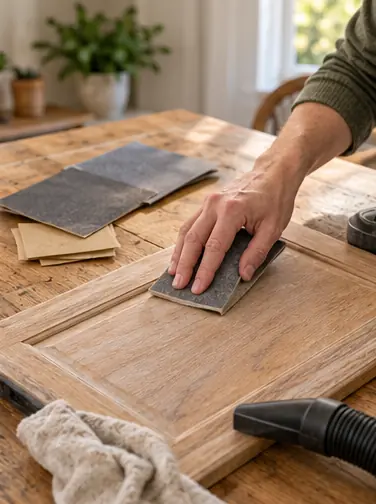 4
Scuff sand
Sand all surfaces lightly with 220 grit until the shine is gone. Vacuum and wipe with a tack cloth.
 5
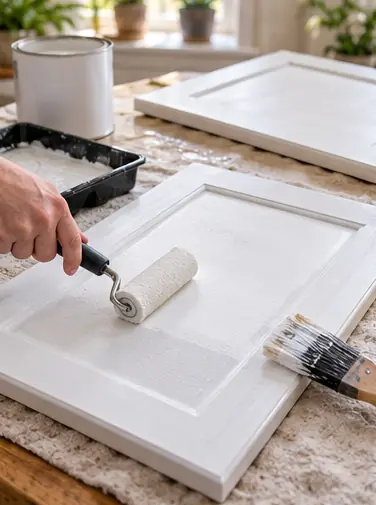
Prime
Brush and roll one coat of bonding primer. Sand lightly with 320 once dry.
 6
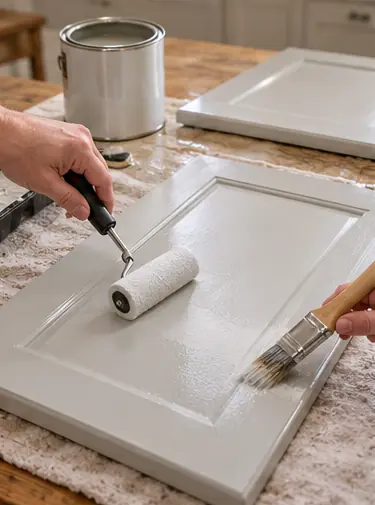
Paint 2 coats
Roll on thin coats of enamel, tipping off with the brush. Do one side of the doors per day and wait the full recoat time on the can.
 7
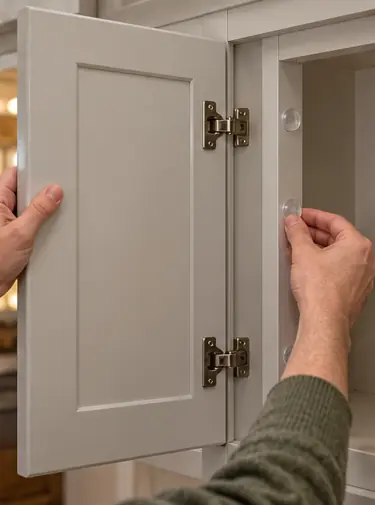
Rehang carefully
Rehang doors once the paint is hard to the touch. Add bumpers so doors don't stick to the frames.
 8
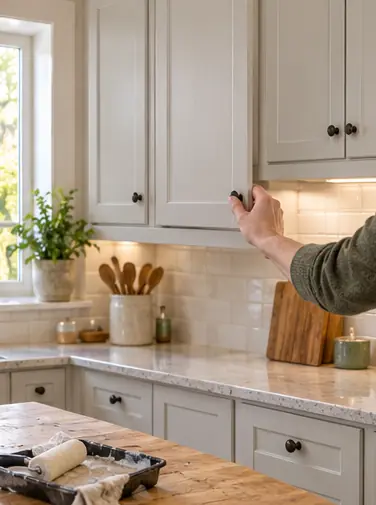
Be gentle while it cures
Close doors gently for 2 to 3 weeks while the enamel fully hardens. Then it handles daily kitchen life.
 Edie's tip
Paint a test door first, start to finish. You'll learn your roller rhythm on the back of a lower door no one sees.
Written by the DIY Project team. How we check · Report a mistake